

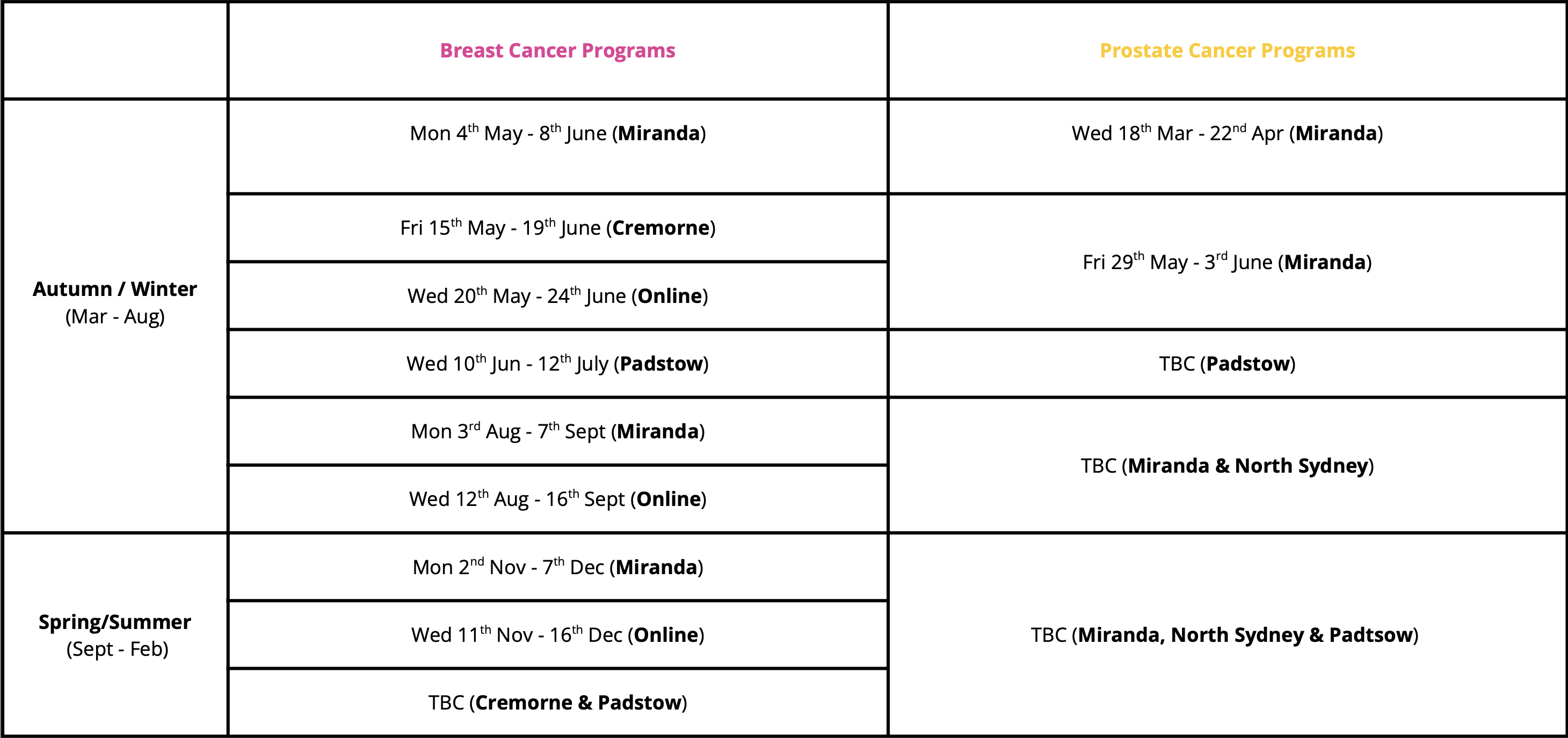
Our 2026 CAN-B Fit calendar is now live!
CAN-B Fit is a 6-week subsidised exercise program for individuals with breast and prostate cancer run in locations across Sydney as well as nationwide (via Zoom)
Check out our calendar here
Why are we so passionate about exercise? Read below to find out!
Due to the abundance of research out there on exercise and cancer, the Clinical Oncology Society of Australia (COSA) recommends that exercise be embedded as a standard part of cancer care and to be viewed as an essential adjunctive therapy to counteract the adverse effects of cancer and its treatments - and its no wonder why!
- Mitigation of treatment-related side-effects
- Improved response to cancer-treatment
- Reduction in cancer-related fatigue
- Increased muscular strength, flexibility and mobility and cardiovascular fitness
- Decreased risk of falls, fractures, and treatment-related bone loss
- Decreased levels of depression, anxiety, and stress
- Improved cognitive function and reduced risk of cognitive decline
- Greater capacity for social engagement and participation
- Improved body image, self-confidence, and independence
What do
the experts
recommend?
How much exercise?
- 150 minutes of moderate-intensity or 75 minutes of vigorous-intensity aerobic exercise (e.g. walking, jogging, cycling, swimming) every week and;
- 2-3 resistance exercise sessions (e.g. weight-lifting, pilates, TheraBand).
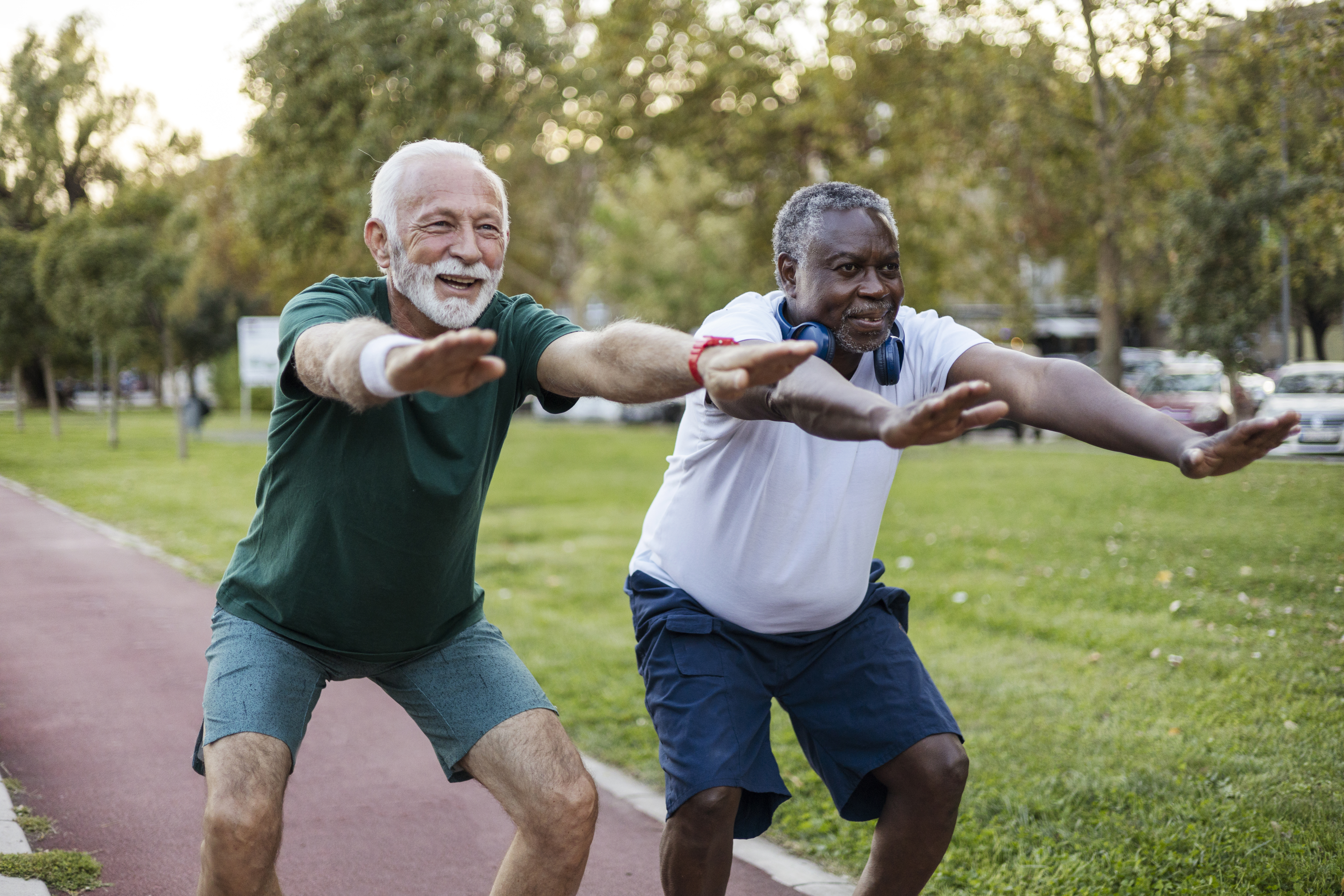
Guidelines recommend patients to do a combination of aerobic and resistance exercise.
- Aerobic activity: also known as 'cardio' is a type of exercise that involves increasing our heartrate by doing repetive muscle movements. Forms of aerobic exercise include walking, jogging, cycling, swimming, dancing. These exercises cause you to breathe faster and more deeply which increases blood flow to your muscles and back to your lungs. Aerobic exercise is important in cancer as it acts as a tumour suppressor. It acts as a powerful adjuvant therapy in cancer treatment as it has been shown to improve drug delivery, enhances immune respone (which is essential for attacking cancer cells), reduces inflammation in our body which is important in suppressing cancee progression and improves a patients tolerance to treatment.
- Resistance training: increases muscular strength by making your muscles work against a weight/resistance. Different forms of resistance training include weight training, pilates and banded exercises using TheraBands. Resistance training plays an important role during cancer by alleviating cancer-related fatigue, helps to preserve muscle mass and bone density (both of which are at high risk of decline as a result of cancer treatment). Regular resistance training has proven to reduce cancer mortality and morbidity.
I'm not currently exercising. Where should I begin?
1. COSA have confirmed that it is safe to exercise during cancer treatment for the majority of inidviduals. However, you should still talk to your GP or a member of your healthcare team (e.g. oncologist, cancer care nurse, physiotherapist) if you have any doubts on beginning and whether it’s safe and/or appropriate.
Alternatively, you can attend one of our structured exercise programs (link CAN-B Fit).
- Exercise is Medicine Australia’ www.exerciseismedicine.com.au
- My Exercise Medicine www.myexercisemedicine.net
- EX-MED cancer EX-MED Cancer | Information
How can we as a foundation, help you?
We understand that having a cancer diagnosis incurs significant financial costs, amongst other costs such as ones to our physical, psychological and social health. Exercise is one of the most powerful tools out there to combat the negative health effects that a cancer diagnosis can bring. However, the financial burden of cancer treatment can be a major barrier for people participating in exercise. Thanks to our donors, we are able to provide a heavily subsidised exercise program which breaks down this barrier and enables individuals with breast or prosate cancer to engage in safe, supportive and effective exercise.
2026 CAN-B Fit Calendar

