Prostate Cancer & Exercise
Prostate cancer treatment can come with a range of side effects such as fatigue, nausea, hot flashes, changes in your sexual function, reduced bone density and muscle mass and strength. The type and likelihood of side-effects that one gets depends on the type of medication they're on and the length of time they're on it. Exercise is an important tool in the toolkit to counteract some of the side effects of treatment as well as reducing your risk of reoccurrence
Prostate cancer treatment can come with a range of side effects such as fatigue, nausea, hot flashes, changes in your sexual function, reduced bone density and muscle mass and strength. The type and likelihood of side-effects that one gets depends on the type of medication they're on and the length of time they're on it. Exercise is an important tool in the toolkit to counteract some of the side effects of treatment as well as reducing your risk of reoccurrence
- Inhibits tumour growth and reduces disease progression at all stages of tumour development
- Improves cancer treatment responses
- Reduced risk of PCa-specific mortality
- Physical benefits: builds fitness, muscle and bone density, immune system function, reduces fatigue among cancer patients
- Social benefits: Greater capacity for social engagement and participation; improved cognitive function and reduced risk of cognitive decline; decreased levels of depression, anxiety and stress; improved quality of life
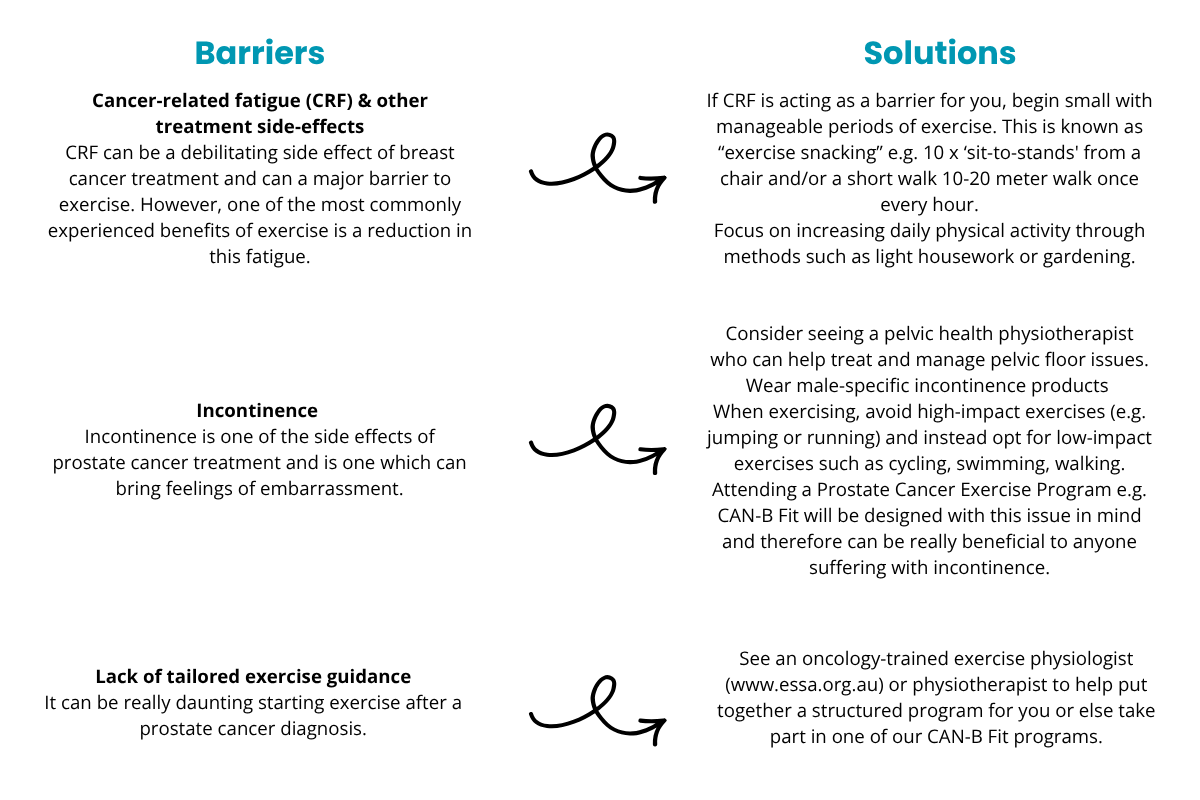
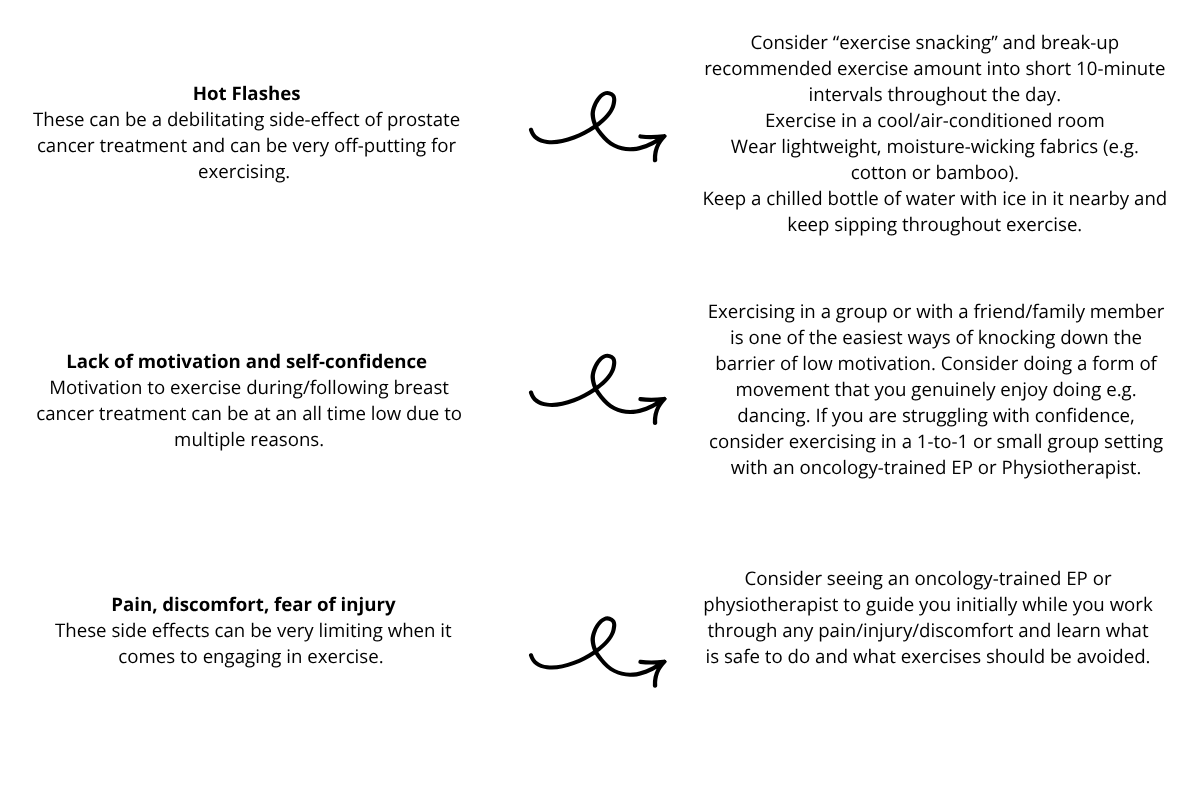
Common Barriers and Solutions to Exercising Following Prostate Cancer